
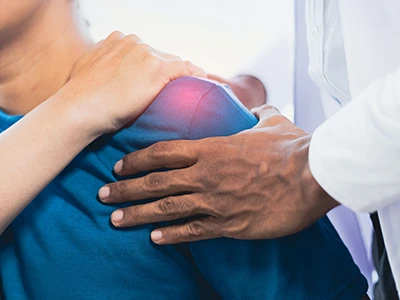
The human shoulder is the body's most mobile joint with a tremendous range of motion. Its evolutionary advantage lies in its unique mobility. It evolved from its earlier ape-like design for tree-climbing, swinging or slowing descent to a structure more optimized for high-speed and accurate throwing, which was essential for hunting and defense.
This evolved design included a lower, more flexible shoulder blade, a twisted humerus and greater rotator cuff flexibility. Unfortunately, the evolved design came at the cost of increased injury risk and instability.
The shoulder’s unique design enables throwing and other intricate tasks commonly performed by athletes, but it also makes an athlete’s shoulder quite prone to injury. Shoulders are a close second to knees among the most common sports injuries, especially in sports involving throwing or overhead motions.
The most common shoulder injuries are rotator cuff and labral injuries. Rotator cuff injuries can range from a rotator cuff tear to tendinitis or impingement, while shoulder labrum injuries often include SLAP, Bankart or posterior tears. Other common shoulder issues include dislocation, fractures of the humerus or collarbone, arthritis or frozen shoulder. Among athletes, shoulder injuries often result from the sudden pivots, high-impact falls and twisting motions seen in sports.
Injuries to the labrum vs. rotator cuff present differently. A labral injury will often cause deep aching pain, catching, popping or clicks, instability, weakness, and reduced range of motion. Rotator cuff injuries bring a dull, aching pain with overhead movement.
These injuries can all cause immense pain and shoulder instability, often sidelining athletes, with surgery typically being the only option for injuries that do not respond to conservative treatment.
Historically, the typical treatment for rotator cuff and shoulder labrum injuries involved conservative methods like rest, NSAIDS and physical therapy to strengthen shoulder muscles, aimed at reducing pain and improving function. Corticosteroids were used for inflammation.
Rehab programs can be extremely effective and oftentimes may be all that is needed. In fact, it is possible to rehab a full-thickness rotator cuff tear, with physical therapy playing a key role. It’s often the first-line approach to improve function and actually reduce pain, even with larger tears. Sometimes surgery becomes necessary if conservative treatment fails, but even then, rehab plays a crucial role both before and after surgery, focusing on:
If these non-surgical treatment options are ineffective, particularly with shoulder instability or severe tears, surgery was previously the only option. Shoulder surgeons often relied upon arthroscopic repair/debridement or sometimes mini-open/open surgical repair for large tears, but these surgeries often involved sling immobilization and months of extensive post-op physical therapy, with an extended period of recovery.
With the emergence of Regenerative Medicine, sports medicine doctors are increasingly offering innovative non-surgical treatment for shoulder injuries – some of which can delay or completely negate the need for surgery. Treatments like PRP are part of a wave of Regenerative Medicine options that have emerged on the scene and become breakthrough options for torn rotator cuffs and labral injuries. As new regenerative therapies continue to emerge for shoulder injuries, the field may render surgery obsolete in the future.
Contact us online or call (240) 754-7954 to schedule a consultation with our shoulder pain specialists at the Center for Sports & Regenerative Orthopedics to see how you can potentially benefit from the breakthrough power of Regenerative Medicine for shoulder injuries.
Regenerative Medicine is a field of medicine that focuses on restoring physical function by naturally repairing or replacing tissues, cells, or organs that have suffered injury or deterioration. It uses the body's own cells to promote healing and restore function, offering a promising innovative approach to sports injury treatment. Some of the options include:
Regenerative treatments for shoulder injuries – PRP and newer, emerging therapies – trigger the production of new, healthy tissue, bringing enhanced healing and restoring function and mobility naturally. This natural treatment approach actually taps into the body's innate natural healing abilities, promoting more effective and faster repair, as compared to more traditional treatment methods. In addition to enhanced tissue repair and improved performance, faster recovery is a tremendous advantage, not to mention the reduced reliance on pain medication – all because of the innovative treatment approaches Regenerative Medicine brings.
For more questions about Regenerative Medicine’s ability to treat shoulder injuries, peak with our sports medicine specialists today to see if Regenerative Medicine could be a life-changing option for you. Let our team at the Center for Sports & Regenerative Orthopedics help you achieve your goals and enhance your health and wellness with the healing potential of Regenerative Medicine.
Call (240) 754-7954 or contact us online to arrange a consultation with our Regenerative Medicine specialists at our offices in Alexandria, Virginia, or Waldorf, Maryland.
