
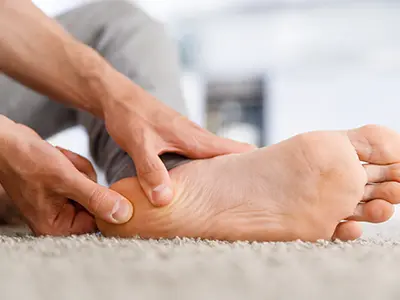
Even though runners develop Plantar Fasciitis more than twice as often as the general population, roughly half of them do not seek professional care for this condition. Untreated, it can lead to increased pain and even permanent disability.
Diagnosed with a simple clinical exam and patient history, seeking to confirm classic symptoms, it can be treated with conventional methods like rest, icing, NSAIDs, stretching, physical therapy, orthotic footwear, and more. Load management is another effective treatment. When conventional measures fail, regenerative medicine offers options like prolotherapy, PRP or stem cell therapy.
Runners are more prone to experience Plantar Fasciitis because running can overload the tissue that connects the heel to the toes, known as the plantar fascia. This fibrous, thick band of connective tissue functions as a shock absorber while running while also providing support to the arch of the foot. Plantar Fasciitis results from micro-tears in the plantar fascia which cause sharp heel pain, usually worse in the morning, especially when runners increase mileage. Overloading of the plantar fascia can be caused by a variety of factors, including tight calf muscles, overtraining or even improper footwear.
Plantar Fasciitis is also seen more in runners because of the repetitive strain the plantar fascia is subjected to, since most runners train on a daily basis if not more often.
As many as 22 percent of runners experience the condition, as compared to only 10 percent of the general population. Even though it is more than twice as likely among runners, roughly half of runners who experience Plantar Fasciitis do not seek care when it develops.1
Plantar fasciitis is the most common cause of heel pain, with an estimated one million outpatient visits annually. It accounts for roughly 10 percent of runner-related injuries2. When a runner presents with heel pain, it is one of the first conditions that must be ruled out.
Plantar fasciitis is diagnosed from a clinical exam and patient history. If the patient complains of heel pain that is present in the first steps upon awakening – especially if it is severe or described as “stabbing” – Plantar Fasciitis is almost always the culprit.
If there is also the characteristic tenderness on the underside of the heel, that confirms the diagnosis. A physician will check for a tender spot on the bottom of the heel, typically on the inside edge, by applying pressure. They may also perform a range of motion check, evaluating tight calf muscles. Another diagnostic test physicians perform involves stretching the plantar fascia by extending the toes upward while the patient is standing, triggering the same pain response that occurs with Plantar Fasciitis.
Orthopedic or sports medicine specialists often use ultrasound to visualize and diagnose quickly at your initial visit. Early evaluation after the condition develops can help to prevent further damage and, in some cases, even permanent disability.
Plantar fasciitis is generally addressed with the most non-invasive, conservative measures that focus on reducing inflammation and pain. These may include:
Taping the foot with athletic tape or using supportive devices like walking boots or crutches may help provide temporary relief.
Most cases of plantar fasciitis improve within several months of consistent, conservative treatment. In cases that do not respond to conservative treatments, shockwave therapy or steroid injections are sometimes used.
When necessary, a fasciotomy is a type of surgery that can release part of the plantar fascia ligament. It is often performed using endoscopic methods for faster recovery.
Load management for Plantar Fasciitis is a gradual adjustment of physical stress on the foot to reduce pain while increasing the plantar fascia’s capacity to handle increasing levels of weight. The process involves reducing all high-impact activity initially. This initial period of rest is followed by structured, high-load strength training designed to strengthen the plantar fascia, instead of continuing the period of complete rest.
Regenerative medicine is a promising next step for chronic Plantar Fasciitis when conventional treatments fail. These therapies aim to repair tissue and reduce long-term pain by stimulating natural healing rather than simply managing symptoms. These regenerative medicine procedures all work to speed healing, reduce pain, and often help to avoid the need for surgery. They can be used together for enhanced results. Options may include:
Platelet-Rich Plasma (PRP) Injections: Using your own platelets, which are rich in growth factors, PRP is derived from your blood, spun in a centrifuge to concentrate platelets, then injected to enhance and speed healing, reducing pain and inflammation. and triggering your body’s intrinsic healing abilities.
Stem Cell Therapy: Stem cell therapy may help repair or regenerate damaged tissue in the foot, including the plantar fascia, to support healing, restore function, and reduce pain associated with more severe or chronic foot injuries. This treatment involves injecting stem cells directly into the injured area to promote tissue repair and recovery.
Prolotherapy: This treatment involves the injection of an irritant solution into damaged, weak, or torn tissues to stimulate your body's natural inflammatory healing response, thereby strengthening your plantar fascia.
New options in Regenerative Medicine are continually being developed, and our team stays on top of the latest developments. Contact us online or call (240) 754-7954 to schedule a consultation with one of our specialists at the Center for Sports & Regenerative Orthopedics to see how you can potentially benefit from the emerging power of Regenerative Medicine for Plantar Fasciitis.
There are a number of conditions that respond well to Regenerative Medicine treatments like Prolotherapy, PRP and Stem Cell Therapy – and Plantar Fasciitis is among them. This advanced level of care is appropriate when:
To learn more about your Regenerative Medicine options - or any of the latest evaluation and treatment methods we offer – simply contact us online or call (240) 754-7954 to schedule a consultation with one of our specialists at the Center for Sports & Regenerative Orthopedics. Explore how you can benefit from the emerging science of Regenerative Medicine.
Most individuals do not seek care for Plantar Fasciitis, but that is often a mistake. While not every injury requires immediate medical attention, you should always seek medical care if you cannot walk, if it feels unstable, or if pain and swelling continue to worsen. It is essential to rule out fractures or severe tears and prevent long-term pain or disability from developing. You actually should seek urgent care if the foot cannot bear any weight, has deformity or shows significant bruising or swelling.
That will depend on the treatment method you choose, as well as how your body responds to the treatment. Generally, with conventional treatment for Plantar Fasciitis like stretching, supportive footwear, orthotics or icing, cases improve within 6 to 12 weeks. Full recovery can take 3 to 6 months for moderate cases, and up to 6 to 12 months or even longer for chronic cases.
If conventional methods are not successful, Regenerative Medicine therapies typically require a phased healing timeline of three to six months with full benefits sometimes continuing to develop for up to a year. Initial improvements are often experienced within weeks. While daily activity can sometimes resume within days after regenerative medicine treatments, full tissue regeneration requires several months as your body repairs the damaged tissue.
It is important to find an orthopedic sports medicine specialist who is not only experienced in dealing with foot injuries and conventional treatment methods, but who is also knowledgeable about emerging Regenerative Medicine therapies.
For more questions about when Regenerative Medicine is an appropriate choice for Plantar Fasciitis, speak with our experts today to see if Regenerative Medicine could keep you in the race. Let our team at the Center for Sports & Regenerative Orthopedics help you achieve your goals and enhance your health and wellness goals with the healing potential of Regenerative Medicine.
Call (240) 754-7954 or contact us online to arrange a consultation with our Regenerative Medicine specialists at our offices in Alexandria, Virginia, or Waldorf, Maryland..
