
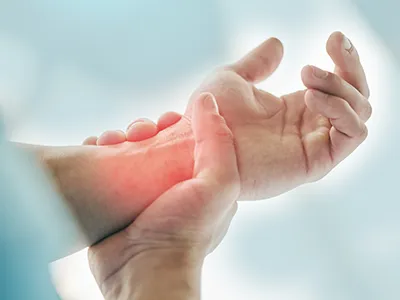
Tears, injuries or degenerative deterioration of the main stabilizing cartilage in the wrist are known as Triangular Fibrocartilage Complex (TFCC) injuries. Untreated, this condition can lead to increased pain, degenerative arthritis, or even permanent disability. Diagnosed with patient history and a clinical exam that identify classic symptoms, it can be treated with non-invasive conventional methods including physical therapy, activity modification, bracing, immobilization with a cast or splint, NSAIDs or corticosteroid injections. If conventional measures fail, Regenerative Medicine options can be especially effective, including prolotherapy, PRP or stem cell therapy.
Call (240) 754-7954 or contact us online to arrange a consultation with our Orthopedic and Sports Medicine specialists at our offices in Alexandria, Virginia, or Waldorf, Maryland.
The main stabilization cartilage in the wrist, known as the articular disc or the triangular fibrocartilage disc, connects the radius to the ulna and cushions the ulnar carpus. It connects forearm bones to wrist bones and is crucial for rotation and grip.
Injury or degenerative deterioration to this stabilizing cartilage are known as Triangular Fibrocartilage Complex (TFCC) injuries. They are most commonly caused by:
You should be evaluated by a orthopedist or sports medicine doctor for a possible TFCC injury if you experience either:
TFCC injuries are often misdiagnosed, leading to a delay in appropriate care.
Any activity that involves intense, repetitive wrist twisting together with axial loading can result in repeated microtrauma or tears to the triangular fibrocartilage disc. These types of injuries are more common in athletes due to the rotational, high-stress forces athletes’ wrists are subjected to during sports like golf, baseball, pickleball, gymnastics and especially tennis. Tennis is the sport with the highest number of TFCC injuries. Because most athletes train on a daily basis, if not more often, athletes also experience TFCC injuries more frequently because of the repetitive strain this stabilizing cartilage endures.
In the general public, TFCC injuries tend to be degenerative in nature and affect older populations. Roughly 50 to 70 percent of adults aged 70 and older show evidence of TFCC. While TFCC injuries are not common among younger people, studies indicate that 23.1 percent of patients treated for TFCC tears sustained them at a younger age (below 30) while participating in sports.
Classic symptoms of a TFCC injury or tear that are key in diagnosing damage to the triangular fibrocartilage disc include:
TFCC injuries are diagnosed from a clinical exam and patient history. If the patient complains of the above symptoms, a TFCC injury is almost always involved. Athletes often delay seeking care and continue playing in spite of the symptoms. They often do not consult a medical professional until the symptoms become severe.
Orthopedic or sports medicine specialists often use ultrasound or X-rays to rule out other issues. Early evaluation after the condition develops can help to prevent further damage and, in some cases, even permanent disability.
Treatment for TFCC injuries in athletes typically begins with the least invasive, non-surgical, conventional approaches. These may include:
Regenerative medicine can repair tissue and reduce long-term pain by stimulating natural healing rather than simply managing symptoms. It offers a promising next step for chronic TFCC injuries when conventional treatments fail. Regenerative medicine procedures all work to speed healing, reduce pain, and avoid the need for surgery. These image-guided injections, including bone marrow aspirate and adipose-derived stem cells, can stimulate tissue repair and reduce chronic wrist pain. They can be used together for enhanced results. Options may include:
New options in Regenerative Medicine are continually being developed, and our team stays on top of the latest developments. Contact us online or call (240) 754-7954 to schedule a consultation with one of our specialists at the Center for Sports & Regenerative Orthopedics to see how you can potentially benefit from the emerging power of Regenerative Medicine for TFCC injuries.
While not every injury requires immediate medical attention, you should always seek medical care if your wrist feels unstable, or if pain and swelling continue to worsen. It is essential to rule out fractures or severe tears and prevent long-term pain or disability. You actually should seek urgent care if the wrist cannot bear any weight, has deformity or shows significant bruising or swelling.
Untreated TFCC injuries can often lead to progressive arthritis, reduced grip strength, persistent joint instability, chronic ulnar-side wrist pain and even permanent disability.
It is important to find an orthopedic sports medicine specialist who is not only experienced in dealing with wrist injuries and conventional treatment methods, but who is also knowledgeable about emerging Regenerative Medicine therapies.
It all depends on the treatment method you choose, as well as how your body responds to the treatment. Generally, with conventional treatment for TFCC injuries improvement begins within 6 to 12 weeks. Full recovery can take 3 to 6 months or up to 6 to 12 months or even longer for chronic cases.
Regenerative Medicine treatments each have their own timeline. Daily activity can sometimes resume within days with initial improvements often experienced within weeks, but full tissue regeneration requires several months as your body repairs the damaged cartilage. Regenerative Medicine therapies typically require a phased healing timeline of three to six months with full benefits sometimes continuing to develop for up to a year.
There are a number of conditions that respond well to Regenerative Medicine treatments like Prolotherapy, PRP and Stem Cell Therapy – and TFCC injuries is among them. This advanced level of care is appropriate when:
For more questions about whether Regenerative Medicine is an appropriate choice for TFCC injuries, speak with our experts today to see if Regenerative Medicine could get you back in the swing of things. Let our team at the Center for Sports & Regenerative Orthopedics help you achieve your goals and enhance your health and wellness goals with the healing potential of Regenerative Medicine.
Call (240) 754-7954 or contact us online to arrange a consultation with our Regenerative Medicine specialists at our offices in Alexandria, Virginia, or Waldorf, Maryland.
